
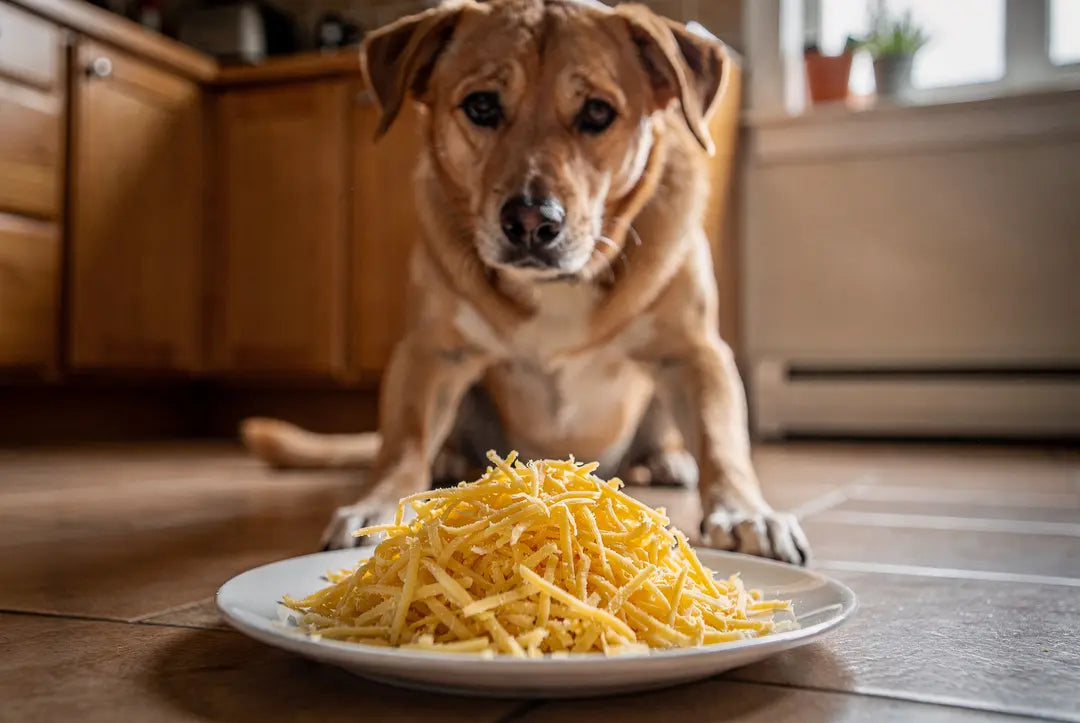
How many times have you reached into your refrigerator to pull out cheese, and your dog suddenly appears right at your feet? (Every time.) Whether you're using it as a training reward, hiding a pill, or simply sharing a smile bite, cheese can be a tasty addition to your dog's routine when offered in moderation.
That said, as dog owners, we share one common question: “How much cheese can a dog eat?” Because it's high in fat and calories, the right portion depends on your dog's size, overall diet, activity level, and individual health needs. While many dogs can enjoy the occasional piece of cheese without an issue, others may be sensitive to dairy or require a more limited approach.
Below, we'll discuss how much cheese dogs can eat, share general serving recommendations based on your dog's size, and offer tips for incorporating cheese into your dog's routine while supporting their long-term health.
How Much Cheese Can a Dog Eat?
Ultimately, cheese is best enjoyed as an occasional treat rather than a regular part of your dog's daily diet. A helpful guideline is the 10% rule, which suggests that treats, including cheese, should make up no more than 10% of your dog's daily calorie intake. The remaining 90% should come from a complete and balanced diet.
While every dog is unique, these general portion guidelines can be a good place to start:
- Small dogs (under 20 pounds): A pea-sized or fingernail-sized piece is plenty. Because small dogs have lower daily calorie needs, even a small cube of cheese can quickly account for a significant portion of their daily treat allowance.
- Medium dogs (20 to 50 pounds): One or two small, dice-sized pieces can be an appropriate treat, depending on your dog's overall diet and activity level.
- Large dogs (50 pounds and up): Two or three small cubes may be suitable as an occasional treat, provided they fit within your dog's daily calorie needs and are well-tolerated.
When introducing cheese into your dog's diet, start small and watch for any signs of digestive upset. Since cheese is naturally calorie-dense, a little goes a long way.
In the bowl
Cheese is a snack. A complete meal does the rest.
Human-grade gently-cooked fresh dog food (3oz $2.99, 9oz $6.99, variety from $24.90) · Dry dog food · Wet dog food
Why Dogs Like Cheese So Much
Cheese has a rich aroma, creamy texture, and savory flavor that many dogs find especially appealing. Those qualities make it a popular high-value reward during training and a convenient way to hide medication when recommended by your veterinarian.
Even so, a dog's enthusiasm for cheese doesn't mean they need it regularly. Dogs thrive on complete and balanced nutrition designed to meet their daily needs. With this in mind, cheese in occasional small amounts allows your pup to enjoy a favorite snack without taking the place of the wholesome nutrition they rely on.
Is Cheese Safe for Dogs?
For many dogs, plain cheese can be enjoyed as an occasional treat offered in moderation. According to the American Kennel Club, cheese naturally contains nutrients such as protein, calcium, vitamin A, essential fatty acids, and B-complex vitamins. However, because it's also relatively high in fat and calories, it's important to consider how it fits within your dog's overall diet.
Beyond this, deciding whether cheese is a good choice depends on your dog's unique needs. Some dogs tolerate dairy well, while others may experience digestive health upset or have health conditions that make cheese a less appropriate option. With everything, however, it's always a good idea to double-check with your veterinarian.
Lactose Sensitivity in Dogs
Some dogs have difficulty digesting lactose, the natural sugar found in milk and dairy products, because they don't provide enough of the enzyme lactase. As dogs get older, lactase production may naturally decrease, making dairy more difficult for some pups to digest than it was when they were younger.
If a dog is lactose intolerant, they may experience digestive upset after eating dairy. Common signs include:
- Gas
- Soft stools
- Diarrhea
- Stomach discomfort
- Vomiting
Generally, these symptoms develop within just a few hours of eating. Although many cheeses contain less lactose than milk, they may still cause digestive upset in some dogs with dairy sensitivities.
When introducing cheese for the first time, start with a small amount and monitor your dog for any changes over the next few hours.
Fat, Calories, and Sodium
In addition to lactose, cheese is naturally high in fat, calories, and sodium. As a result, large amounts may contribute to digestive upset or excess calorie intake over time. Moderation is key, especially since even a few extra bites can add up quickly for smaller dogs.
Additionally, some dogs may need additional dietary restrictions. If your dog has a history of pancreatitis, kidney disease, heart disease, obesity, or another health condition, make sure to talk to your veterinarian before offering cheese.
Cheeses That Are Usually Better Choices for Dogs
If you do decide to offer your dog cheese as an additional treat, plain varieties with fewer ingredients are often a good place to start. While every dog is different, these options may be suitable for many dogs when served in small amounts:
- Low-fat mozzarella
- Plain cottage cheese
- Mild cheddar
Before offering any cheese to your dog, make sure to read the ingredient label carefully. Look for plain varieties without any added herbs, spices, or other flavorings, and be mindful of the sodium content.
Cheeses and Cheese Products to Be Cautious With Giving Dogs
While plain cheese can be an appropriate occasional treat for many dogs, some cheeses and cheese-based foods are better left off the menu.
Let's start with blue-veined cheeses, like Roquefort, Gorgonzola, and Stilton. These options contain mold cultures that may produce compounds capable of causing serious illness in dogs. Keep it safe by avoiding these cheeses on your pup's plate.
Additionally, highly processed or heavily salted cheeses, including some processed cheese slices, American cheese, and feta, are also less suitable. The same applies to flavored cream cheeses and cheese spreads that may contain herbs and spices.
It's also important to remember that cheese-based human foods like pizza, nachos, or mac-and-cheese are very different from offering a small piece of plain cheese.
When Dogs Should Skip Cheese
While many dogs can enjoy a small amount of cheese as an occasional treat, it may not be the best choice for every dog. Consider choosing a different treat or talking with your veterinarian first if your dog:
- Has a known dairy sensitivity or has had digestive upset after eating dairy in the past
- Is following a weight management plan
- Has a history of pancreatitis or has been advised to eat a lower-fat diet
- Has kidney or heart conditions that require sodium restrictions
- Has a sensitive stomach or is transitioning to a new diet
- Already receives several treats, toppers, or other extras throughout the day
Using Cheese as a Training Treat
Cheese can be a fun, high-value reward for many dogs, especially during training or when you need to hide medication. However, because it's naturally higher in fat and calories, it's best reserved as an occasional treat, not an everyday expectation.
For daily training sessions or frequent positive reinforcement specifically, treats made for these occasions can be the more practical choice. Health Extension's Training Treats are vet-formulated and thoughtfully crafted for rewarding food behavior while making portion control easier.
Healthier Ways to Build a Balanced Treat Routine
Treats should complement your dog's complete and balanced nutrition, not compete with it. When thinking about how much cheese your dog can enjoy, it helps to look at the bigger picture. Cheese, training treats, chews, meal toppers, table scraps, these all contribute to your pup's daily calorie intake.
Building a balanced treat routine begins with moderation, appropriate portion sizes, and choosing treats that fit your dog's individuality.
Make cheese part of a balanced treat routine to support your dog's balanced diet.
Cheese can be a perfectly fine occasional treat for many dogs when offered in the right amount for their size and health status. The key is keeping it small, infrequent, and part of a diet that's otherwise complete and balanced. Pay attention to how your dog responds, factor in everything else they're eating that day, and when in doubt, check with your vet.
In the bowl
Cheese is a snack. A complete meal does the rest.
Human-grade gently-cooked fresh dog food (3oz $2.99, 9oz $6.99, variety from $24.90) · Dry dog food · Wet dog food