Description
Bone broth is the cooking liquid in every Health Extension human-grade gently-cooked fresh dog food recipe. This article explains why that choice matters for nutrients, taste, and hydration, and how to use broth as a meal, mixer, or Broth-Licious cup.
Bone Broth for Dogs: Why We Cook Every Recipe in It
TLDR
- Health Extension cooks every human-grade gently-cooked fresh dog food recipe in bone broth so minerals and water-soluble vitamins that leave the ingredients stay in the pouch you serve.
- The American Kennel Club describes bone broth as a source of collagen, amino acids, and minerals that many owners use for hydration, joints, and appetite.
- Moisture-rich meals help small dogs who skip dry kibble. VCA Animal Hospitals notes that taste (palatability) is a major reason dogs refuse food.
- Pair broth-cooked pouches with Little Bites if you mix formats, or serve a Broth-Licious cup as a topper.
- Start with complete recipes. Pouches from $2.99 (3 oz) and $6.99 (9 oz), variety packs from $24.90. Read what human-grade fresh dog food is and shop gently cooked dog food.
Table of Contents
- What bone broth is in a dog bowl
- Why we cook the meal in the broth
- Taste, hydration, and picky small dogs
- How Health Extension uses broth across the line
- How to serve it this week
- When to call your veterinarian
- Final takeaway
What bone broth is in a dog bowl
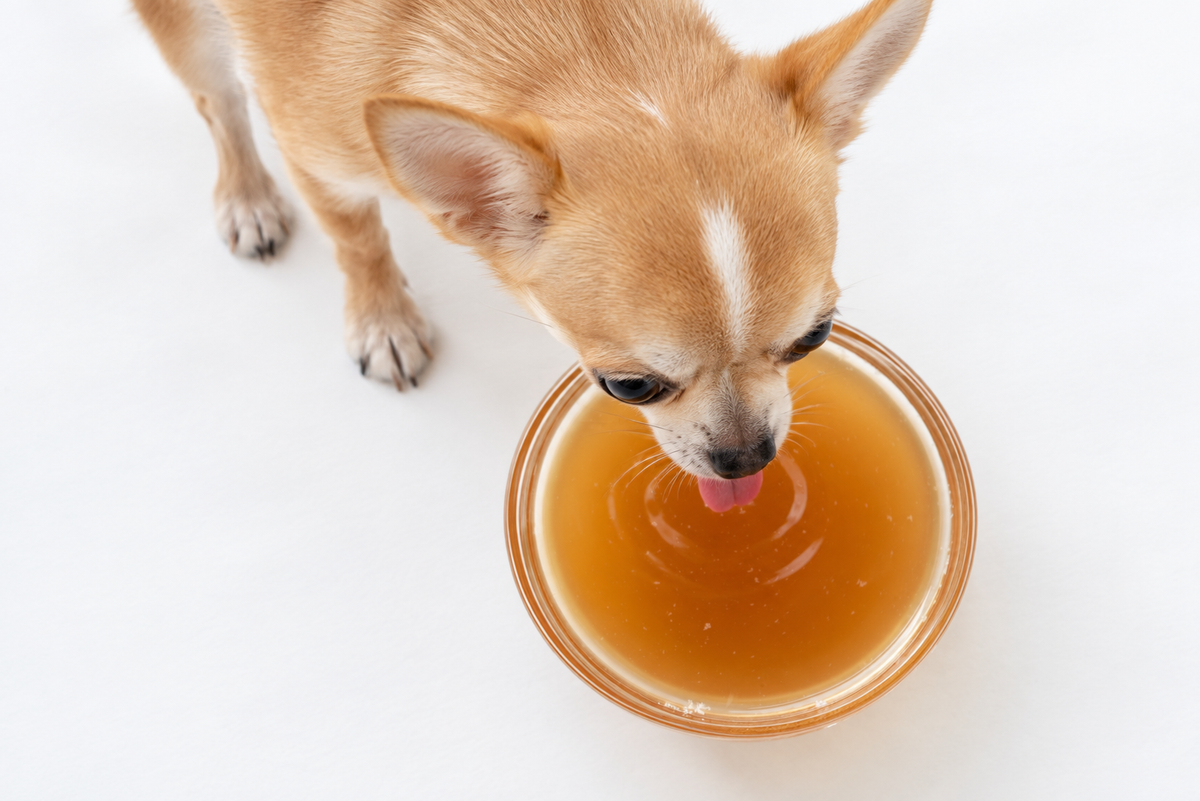
Bone broth is a savory liquid made by simmering bones, connective tissue, and often vegetables in water. For dogs, the useful parts are collagen that breaks down into gelatin, amino acids such as glycine and proline, minerals that leach from bone, and the aroma that makes a meal smell like real food.
The AKC overview of bone broth lists collagen, amino acids, and minerals among the reasons owners add it to bowls. AKC also includes bone broth on its list of foods used when a dog has an upset stomach, next to plain pumpkin and shredded chicken, because it is moist, mild, and easy to lap.
Health Extension treats broth as a cooking medium, not a garnish. Chicken & Pumpkin uses chicken bone broth. Beef & Potato uses beef bone broth. Lamb & Carrot and Duck & Kale use beef bone broth. Salmon uses duck bone broth. The vegetarian recipe uses vegetable broth. You serve the solids and the liquid together.
That is different from boiling vegetables, draining the pot, and throwing the cooking water away. It is also different from pouring a store carton of salty soup over kibble. The recipes are veterinarian formulated and complete and balanced for the stated life stage. FDA guidance on complete and balanced pet food explains that AAFCO nutrient profiles set the bar for those claims. Broth is how we cook. It is not a substitute for a balanced formula.
Why we cook the meal in the broth
Water-based cooking moves some vitamins and minerals into the liquid. If you discard that liquid, those nutrients leave the bowl. Health Extension keeps the broth in the pouch so the meal you open is the meal that was cooked.
Internal cooking-method notes for our line make the same point: pressure and gentle cooking keep more water-soluble vitamins than long boiling, and serving the cooking liquid captures what does move into the broth. Proteins stay nutritionally useful. Minerals are not heat-sensitive in the same way vitamins are. Antioxidants in vegetables can become more available once cell walls soften.
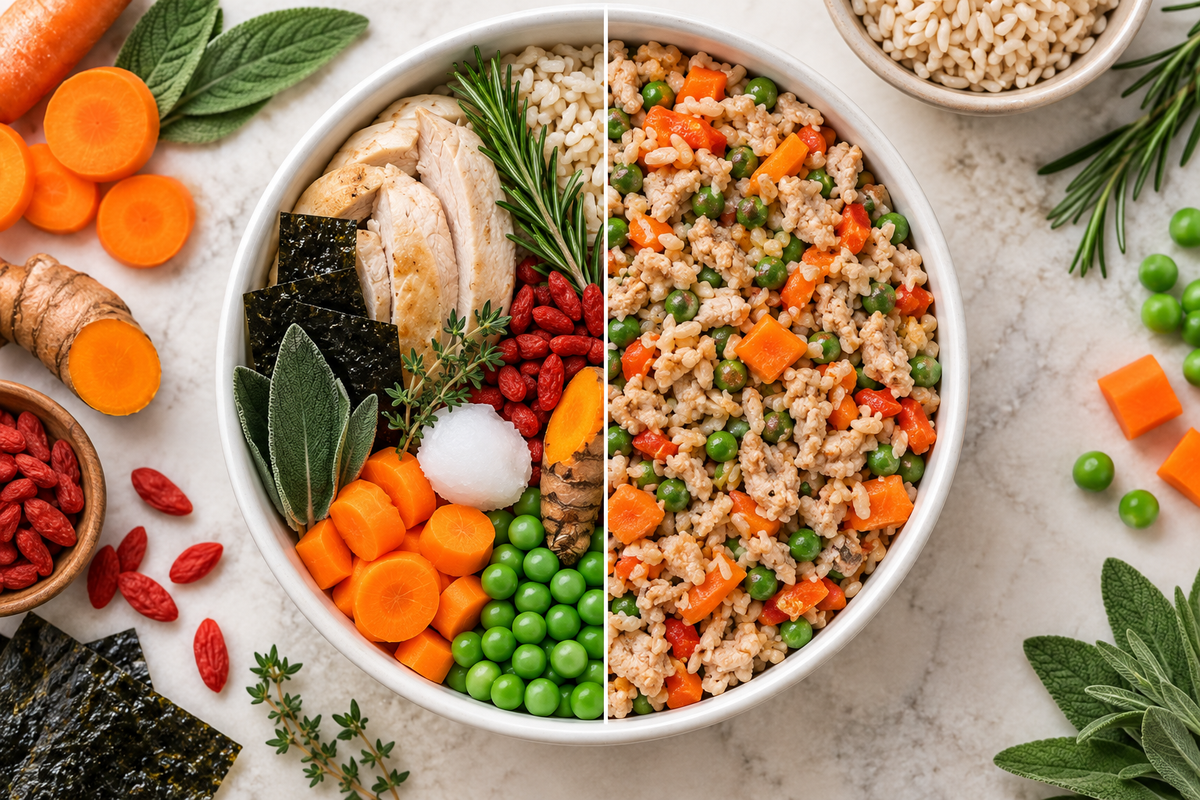
That is why the pouches read as “fresh whole foods in bone broth.” Superfoods in the recipes include turmeric, kelp, sage, thyme, coconut oil, and goji berry, depending on the flavor. Pumpkin, carrot, sweet potato, broccoli, and kale sit in the same liquid as the meat. You do not need a blender or a fridge thaw. Open the pouch, empty it into a bowl, and serve.
Kibble is a different format with its own benefits: calorie density, crunch, and easy measuring. We do not rank formats. We cook the fresh line in broth because the format is wet, and wet cooking without the broth would waste part of the nutrition.
Taste, hydration, and picky small dogs
Small dogs often live on small meals. A skipped bowl is a larger share of the day’s calories than it is for a 70-pound dog. Smell and texture drive whether that bowl gets finished.
VCA’s guide to canine picky eaters is clear that palatability is a major factor in pet food, and that sudden refusal can also signal pain, nausea, or other medical issues. Rule out illness first. If your veterinarian says the dog is healthy and simply fussy, moisture and aroma are practical levers.
Bone broth helps both. It coats meat and vegetables so the bowl smells like a kitchen, not a warehouse. It adds water, which many small dogs do not drink enough of when they eat only dry food. Soft texture is easier on crowded little jaws than large kibble pieces.
You can still feed a holistic dry food. Little Bites Chicken & Brown Rice is sized for teacup, toy, and miniature breeds, with real chicken first and 30+ superfoods. Mix a spoon of human-grade gently-cooked fresh dog food into that kibble, or rotate pouches as full meals. Our mixing article on the Gently Cooked Articles blog walks through calories if you use both formats.
How Health Extension uses broth across the line
Human-grade gently-cooked fresh dog food. Every recipe except the vegetarian pouch cooks in animal bone broth. Chicken & Pumpkin is the usual first pouch for picky eaters: lean chicken, fiber-rich pumpkin, brown rice, green peas, chicken bone broth. Beef & Potato uses beef bone broth for dogs who want a richer meal. Duck & Kale and Salmon bring different proteins plus the same superfood idea. Shop the full set on the gently cooked collection. Live prices: 3 oz $2.99, 9 oz $6.99, 3 oz variety pack from $24.90.
Broth-Licious cups. These are single-serve, shelf-stable cups built around broth plus a functional angle: Healthy Belly (chicken and pumpkin), Mobility (chicken and carrot), Vitality (beef and green bean), Shiny Coat (ocean fish). Use a cup as a complete adult meal or as a topper. They are not the same product as the pouches, and they are not ranked above kibble. They are another way to put broth in the bowl.
Air-Dried Superfoods. These are gently air-dried, not broth-cooked. They work as a complete meal, topper, or high-value treat when you want meaty texture without refrigeration. Use them with broth pouches if you want mixed textures. Do not expect them to pour like a liquid.
Family ownership since 1963 is why this is consistent. Three generations still decide that recipes should taste like food pets finish, with real meat, whole produce, and no corn, wheat, or soy in core formulas.
How to serve it this week
- Confirm the pouch is complete and balanced for your dog’s life stage. Most meat recipes are All Life Stages. Vegetarian is adult maintenance only.
- For a 3 oz pouch, empty the full pouch into a bowl for a small dog, or split across two meals if your calorie chart says so. For a 9 oz pouch, portion with a kitchen scale.
- If you mix with Little Bites, reduce kibble calories by the calories in the pouch. Do not add a full pouch on top of a full cup of kibble.
- Transition over several days. Replace a quarter of the old food, then half, then most of the meal.
- Store unopened pouches in a pantry. They are shelf-stable. Refrigerate leftovers in a covered container and use promptly.
- Skip onion, garlic, high-salt kitchen stock, and leftover soup. Those are not the same as the broth in our recipes.
Read the education page on human-grade fresh dog food if you want the format explained in one place. Then pick a starter flavor. Chicken & Pumpkin is the usual first order.
When to call your veterinarian
Call your veterinarian if your dog refuses food for more than a day, vomits, has diarrhea, loses weight, or seems painful when chewing. Broth and fresh food do not replace medical care. Dogs with diagnosed kidney disease, pancreatitis, or food allergies need a plan from the clinic, not a new pouch chosen from a blog.
Final takeaway
We cook every human-grade gently-cooked fresh dog food recipe in bone broth because that is how you keep the cooking liquid, the aroma, and the water-soluble nutrients in the same bowl. Pair it with Little Bites if dry food still fits your routine, or add a Broth-Licious cup when you want a single-serve broth meal. Shop gently cooked dog food when you are ready to try a pouch.