Description
Picky small dogs often skip meals because aroma, moisture, and texture fall short, not because the bag looks complete on paper. This guide explains why taste matters as much as nutrition, and how human-grade gently-cooked fresh dog food, Little Bites, and bone broth can help a small dog finish the bowl.
Picky Small Dog? Here's Why Taste Matters as Much as Nutrition
A complete formula on the label does not help if your Yorkie sniffs the bowl and walks away. Small dogs often eat with less focus than larger dogs, so aroma, moisture, and texture decide whether the meal actually gets eaten. Nutrition still has to be complete and balanced. Taste is what gets it into the dog.
Health Extension builds both sides of that equation: human-grade gently-cooked fresh dog food cooked in bone broth, plus Little Bites kibble sized for small jaws.
TLDR
- Owners often call toy and terrier breeds “finicky.” Controlled feeding trials found small dogs spent less time with their nose in the bowl than medium dogs and reacted more strongly to palatability differences (AFB International).
- Rule out dental pain, nausea, and other medical causes before you treat picky eating as a personality trait (VCA Animal Hospitals).
- Moisture, aroma, and familiar proteins usually move a small dog faster than a new bag of the same dry texture.
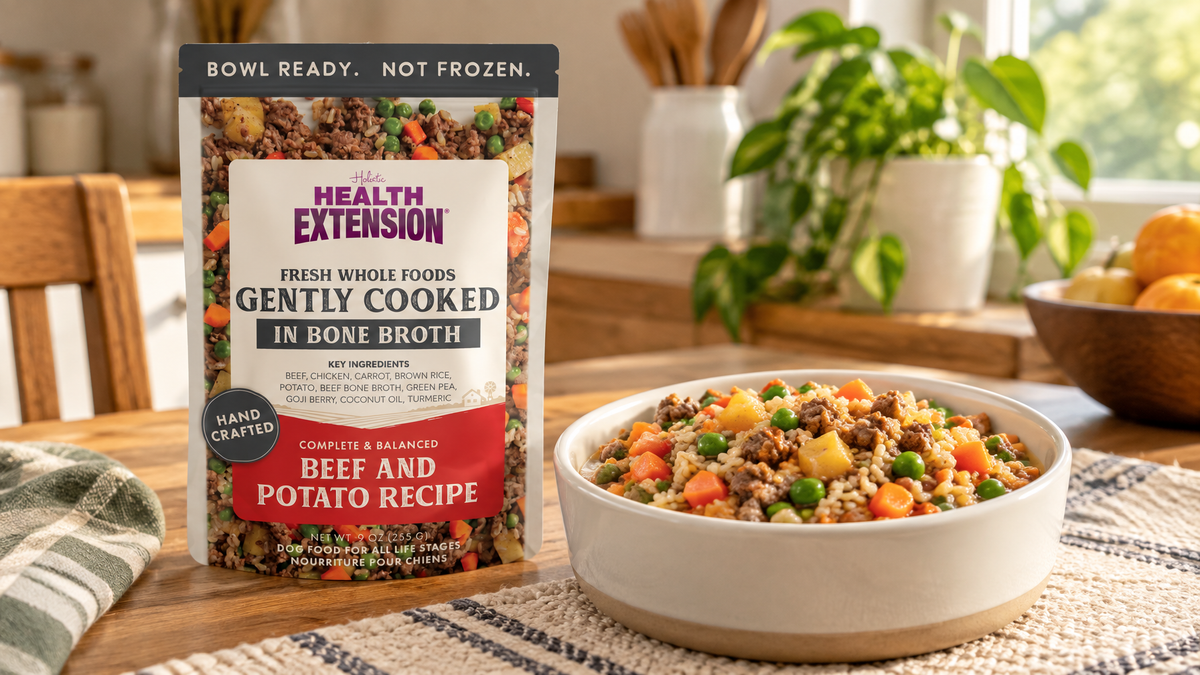
- Health Extension human-grade gently-cooked fresh dog food is shelf-stable, cooked in bone broth, and sold in 3 oz pouches ($2.99) that fit small appetites.
- Mix a pouch over Little Bites or add Broth-Licious when you want extra aroma without changing the whole diet.
Table of Contents
- Why small dogs get labeled picky
- Taste, smell, and texture: what palatability actually means
- Nutrition still has to be complete
- Medical checks before you swap food
- Habits that train a small dog to wait
- How to make a small-breed bowl more appealing
- Where Health Extension fits
- A simple 7-day taste trial
- FAQ
Why small dogs get labeled picky
In a global owner survey of 2,410 dogs, toy and terrier groups were more often described as finicky. AFB then ran panel trials at its Palatability Assessment Resource Center. Small dogs averaged 85.5% food focus (nose-in-bowl time in the first five minutes) versus 93.1% for medium dogs. They looked up more, got distracted sooner, and showed larger swings between foods (AFB International).
That is not “your dog is spoiled” as a diagnosis. It is a feeding style. For an 8-pound dog, one skipped meal can also feel especially noticeable to a pet parent. Compact jaws can make large pieces harder to manage. If the food smells dull or feels dry, many small dogs simply leave.
The AKC notes that some dogs eat to live and others live to eat, and that a sudden drop in appetite can signal illness, especially in puppies and seniors (American Kennel Club). Treat chronic fussiness and a sudden stop as different problems.
Taste, smell, and texture: what palatability actually means
Palatability is how readily a dog chooses and finishes a food. Dogs rely heavily on smell. Moisture carries aroma. Fat carries flavor. Texture tells the mouth whether the bite is worth chewing.
A 2023 review in Animals summarizes the main drivers for dogs: odor, taste, texture, and previous experience with a diet all shape intake (PMC). Gentle cooking in liquid keeps water-soluble flavors in the meal instead of pouring them down the drain. Health Extension includes the cooking liquid, bone broth, in every human-grade gently-cooked fresh dog food pouch, so those flavors stay in the bowl.
Texture is independent of kibble diameter. Small-breed kibble still helps tiny mouths, which is why Little Bites exists. Many picky small dogs also respond to a moist mixer: the dry pieces pick up broth and meat juices, so the first sniff is stronger.
Nutrition still has to be complete
Taste without a complete nutrient profile is table scraps. Look for an AAFCO statement for the life stage you feed. Health Extension Chicken & Pumpkin, Beef & Potato, Lamb & Carrot, Duck & Kale, and Salmon human-grade gently-cooked fresh dog food recipes are formulated to meet AAFCO Dog Food Nutrient Profiles for All Life Stages, including growth of large-size dogs. The Vegetarian recipe is formulated for adult maintenance.
Typical guaranteed analysis on the meat recipes: 10% min protein, 5-6% min fat, 3% max fiber, 78% max moisture. That moisture is why the food smells and feels like a meal instead of a biscuit. It also means you portion by calories, not by “one cup looks like a cup of kibble.”
Superfoods in the pouches include bone broth, turmeric, kelp, sage, thyme, coconut oil, and goji berry, plus vegetables such as pumpkin, carrot, and sweet potato. Those ingredients support digestion and palatability. They do not replace a complete formula.
Learn more about the standard on our human-grade fresh dog food education page.
Medical checks before you swap food
VCA lists dental disease, gastrointestinal upset, kidney and liver disease, and other conditions that cut appetite (VCA). Book a vet visit if you see:
- Sudden refusal after previously normal eating
- Drooling, pawing at the mouth, or chewing on one side
- Vomiting, diarrhea, or weight loss
- Lethargy, or a puppy or senior who skips more than one meal
Do not keep rotating foods for weeks while a painful tooth goes untreated. Once a clinician clears medical causes, you can work on flavor and routine.
Habits that train a small dog to wait
Small dogs often get extra treats, table food, and hand-feeding. That trains them to hold out for a better offer. A short feeding window helps: put the bowl down for 15-20 minutes, then pick it up. No second menu at 8 p.m. unless your veterinarian set a medical feeding plan.
Keep treats under about 10% of daily calories. Use a measured scoop of Little Bites or a spoon of pouch food as training rewards instead of a stream of biscuits.
Stress, new people, and travel also suppress intake. Shelf-stable pouches travel without a cooler, which keeps the familiar smell available on the road.
How to make a small-breed bowl more appealing
- Start with aroma. Warm the pouch in a bowl of warm water (do not microwave in the pouch unless the package directs it). Warmth lifts bone-broth smell.
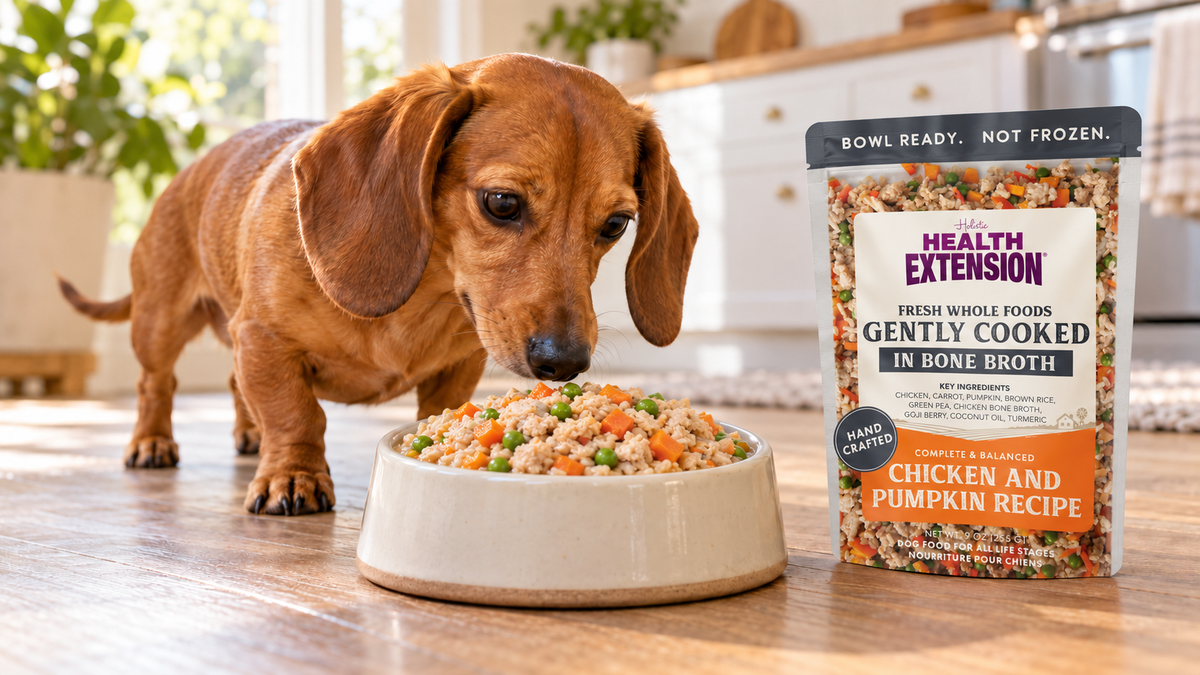
- Match protein to what your dog already likes. Chicken & Pumpkin is the usual first try for picky eaters. Lamb & Carrot or Beef & Potato give a different aroma if chicken is ignored.
- Use a mixer, not a full swap, on day one. Spoon 1-2 tablespoons of human-grade gently-cooked fresh dog food over the usual Little Bites serving. Increase over 5-7 days.
- Offer a 3 oz pouch ($2.99) so leftovers stay small. Variety Pack 3 oz starts at $24.90 if you want to test several recipes. 9 oz pouches are $6.99 for dogs who finish more volume.
- Add Broth-Licious as a topper when you want bone broth and a second texture without changing the base kibble.
- Keep kibble in the plan if it works. Mixing fresh and dry is a valid feeding style. See our guide on mixing human-grade gently-cooked fresh dog food with kibble.
Do not frame kibble as a lesser food. Little Bites is complete small-breed nutrition with bite-sized pieces, real chicken first, and 30+ superfoods. The pouch adds moisture and aroma. Together they cover taste and daily nutrition.
Where Health Extension fits
Health Extension has been family-owned across three generations of holistic pet nutrition. The gently cooked line is positioned as Fresh Without the Fridge: human-grade ingredients, cooked in bone broth, shelf-stable, ready to serve.
Chicken & Pumpkin pairs lean chicken with fiber-rich pumpkin for dogs who need a gentle, familiar flavor. Beef & Potato and Lamb & Carrot give red-meat aroma. Shop the full set on the human-grade gently-cooked fresh dog food collection.
Little Bites Chicken & Brown Rice covers the dry half of the bowl for teacup, toy, and miniature breeds. Broth-Licious cups add a bone-broth boost for coat, belly, vitality, or mobility recipes.
A simple 7-day taste trial
| Day | Bowl |
|---|---|
| 1-2 | Usual Little Bites + 1 tbsp Chicken & Pumpkin, warmed |
| 3-4 | Half the kibble calories replaced with pouch food |
| 5-7 | Full pouch meal, or a 50/50 mix if you prefer both formats |
Weigh your dog at the start and end of the week. If stool stays formed and intake rises, keep the recipe. If they still refuse, try Lamb or Beef before you assume “fresh food failed.” Rotate proteins for interest, not because the first recipe is incomplete.
FAQ
Why does my small dog eat treats but skip meals?
Treats are usually higher in fat and aroma and arrive from your hand. Meals compete with that. Use part of the daily ration as training food so the “good stuff” is the same complete diet.
Can I mix human-grade gently-cooked fresh dog food with kibble every day?
Yes. Count total calories so the mix does not overfeed. Many small-breed homes use Little Bites as the base and a 3 oz pouch as the mixer.
How fast should I switch?
Healthy adult dogs often do well over 5-7 days. Slow down if stool loosens. Stop and call your veterinarian if vomiting or refusal lasts more than a day.
Does cooking destroy the nutrition I am trying to feed?
Gentle cooking in a sealed pouch retains more water-soluble vitamins than long boiling, and the broth stays in the food. Proteins and minerals remain available. The meal is cooked for safety and digestibility, then served with its cooking liquid.
What if my dog is a puppy?
Use All Life Stages recipes (Chicken, Beef, Lamb, Duck, Salmon) rather than the Vegetarian adult-maintenance formula. Confirm portions with your veterinarian for growth.
Conclusion
Picky small dogs are often responding to smell, moisture, and distraction, not rejecting nutrition on principle. Confirm health first, then feed a complete diet that actually smells like food. Health Extension human-grade gently-cooked fresh dog food, Little Bites, and bone broth give you that combination without a freezer and without talking down the kibble already in your pantry.
Shop human-grade gently-cooked fresh dog food or start with the 3 oz Variety Pack.