Description
Small dogs show food-upgrade clues in energy, stool, coat, picky eating, and mealtime fuss. Use these five signs to decide when human-grade gently-cooked fresh dog food, Little Bites, or a mixed bowl makes sense.
5 Signs Your Small Dog Might Be Ready for a Food Upgrade
Small-breed dogs live close to the bowl. A Yorkie, Pomeranian, or Cavalier often eats the same kibble for years, then you notice leftovers, a dull coat, or stools that never quite settle. Those clues do not mean dry food failed. They mean the current recipe, kibble size, or moisture level may no longer match a fast metabolism and a tiny stomach.
Health Extension has built holistic formulas since 1963 as a family-owned company. Today that includes Little Bites for teacup and toy mouths, plus human-grade gently-cooked fresh dog food cooked in bone broth and sold in shelf-stable pouches. This guide walks through five practical signs, what they usually mean, and how to change the bowl without turning kibble into the villain.
TLDR
- Watch energy after meals, stool quality, coat and skin, leftover kibble, and how hard you work to get a small dog to eat.
- Small stomachs fill fast. Dense calories, smaller bites, and extra moisture often help more than a bigger serving of the same food.
- A food upgrade can mean a better-fitting kibble, a mixed bowl, or a full switch to human-grade gently-cooked fresh dog food. Many dogs do well with both formats.
- Health Extension pouches are complete meals for most recipes, ready to serve with no fridge. 3 oz pouches are $2.99, 9 oz pouches are $6.99, and variety packs start at $24.90.
- Change food over 7 to 10 days. Talk with your veterinarian if you see vomiting, sudden weight loss, or signs of illness.
Table of contents
- Sign 1: Energy dips after meals, or meals never quite fill the tank
- Sign 2: Stool quality stays messy even when the schedule is steady
- Sign 3: Coat, skin, or “dog smell” looks off for the breed
- Sign 4: Your small dog walks away from the bowl
- Sign 5: You spend more time coaxing than feeding
- How to upgrade without stressing a tiny stomach
- Where Health Extension fits
Sign 1: Energy dips after meals, or meals never quite fill the tank
Small dogs burn calories faster than large dogs of the same age. A 10-pound adult still needs a complete amino acid profile, fat for energy, and enough calories in a serving that fits a small stomach. If your dog is ravenous an hour after breakfast, naps hard after lunch, or looks lean despite a full cup of kibble, the food may be bulky without being dense enough.
Look at the guaranteed analysis and the feeding guide together. A high-fiber maintenance kibble may not provide the calorie density some toy breeds need in smaller portions. A small-breed recipe such as Little Bites uses a smaller kibble and a higher calorie density so the same nutrition fits a smaller volume. If you want more moisture in that calorie budget, add a 3 oz pouch of human-grade gently-cooked fresh dog food as part of the day’s calories instead of stacking extra dry cups.
Sign 2: Stool quality stays messy even when the schedule is steady
Stool is one of the fastest feedback loops you have. Soft stools, straining, or a “pudding then pebble” pattern often point to fiber type, fat level, or a food that your dog does not digest well. Parasites, sudden table scraps, and rapid food switches cause the same picture, so rule those out first.
When the schedule is clean and the stools still vary, try a simpler wet meal with named meat, pumpkin or carrot, and bone broth. Health Extension Chicken & Pumpkin human-grade gently-cooked fresh dog food uses chicken, pumpkin, carrot, brown rice, green pea, and chicken bone broth. Pumpkin and inulin support stool form. Because the cooking liquid stays in the pouch, water-soluble nutrients are eaten instead of poured down the drain. That is a different approach than boiling vegetables and discarding the water.
Keep kibble in the rotation if it works for your dog. Mix a spoon of fresh food over Little Bites rather than swapping overnight. Watch stool for a week before you change anything else.
Sign 3: Coat, skin, or “dog smell” looks off for the breed
A small dog’s coat is easy to see up close. Dry flakes, a coat that feels straw-like, or a persistent oily odor after a bath can track with dietary factors, including omega fatty acid intake, or a diet that is not well absorbed. Dental tartar and skin folds need their own care. Food will not replace brushing. It can still change how the coat looks over six to eight weeks.
Recipes that include coconut oil, salmon oil, or fish in broth give you visible fat sources. Little Bites Chicken & Brown Rice lists coconut oil and salmon oil among its supporting ingredients and more than 30 superfoods. Duck & Kale and Salmon human-grade gently-cooked fresh dog food recipes use duck or salmon with herbs and bone broth. Broth-Licious Shiny Coat cups add ocean fish in fish bone broth if you want a targeted topper, not a full diet change.
Give any coat-focused change time. Photograph the ruff and the back monthly in the same light so you are not guessing.
Sign 4: Your small dog walks away from the bowl
Picky eating in small breeds is common. Tiny jaws prefer a smaller kibble. Aroma and moisture drive interest more than a printed calorie count. If your dog sniffs, walks off, then begs later, the food may be nutritionally fine and still a poor sensory match.
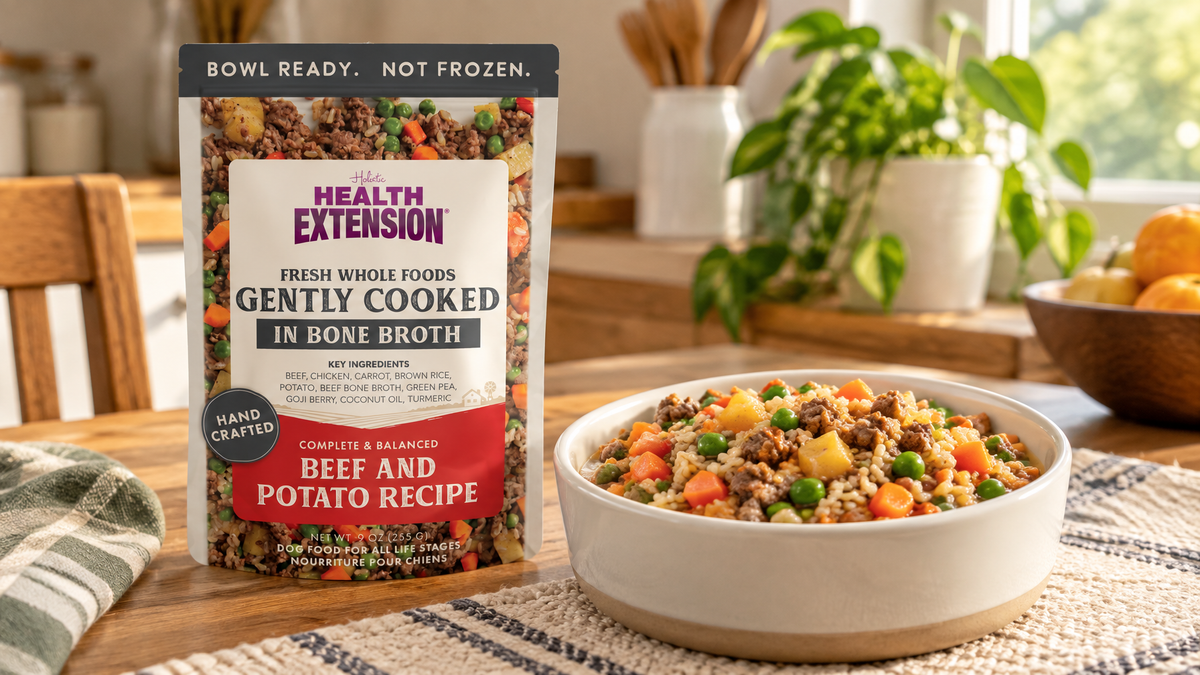
Do not train picky behavior with a rotating buffet of human leftovers. Do offer a format that smells like a real meal. Human-grade gently-cooked fresh dog food is cooked in bone broth and served at room temperature. Open the pouch, plate it, and you have a complete meal for the meat recipes (Chicken & Pumpkin, Beef & Potato, Lamb & Carrot, Duck & Kale, and Salmon are formulated for all life stages). Vegetarian is adult maintenance only.
A 3 oz pouch ($2.99) is a practical trial size for a toy or miniature dog. A 9 oz pouch ($6.99) covers a larger small breed or a mixed household. Variety packs from $24.90 let you test proteins without committing to a case.
Sign 5: You spend more time coaxing than feeding
If breakfast takes 20 minutes of hand-feeding, crumbled toppers, and a second bowl in another room, the feeding system is working against you. Small dogs also tend to hide dental pain and nausea. Have teeth and weight checked if the change was sudden.
When the exam is clear, simplify the bowl. One measured serving of Little Bites plus a measured scoop of human-grade gently-cooked fresh dog food is easier than five mix-ins. Shelf-stable pouches skip thawing and fridge space, which matters in a small kitchen or on travel days. Bone broth in the recipe adds aroma without a separate saucepan.
You can still keep dry food as the convenient base. Mixing formats is normal. The upgrade is a better-fitting kibble, a moist complete meal, or both, not a lecture about dry food.
How to upgrade without stressing a tiny stomach
- Weigh your dog and write down the current daily calories from the bag or pouch.
- Swap 25% of the old food for the new food for two to three days, then 50%, then 75%, then 100% if stools stay firm.
- Count the fresh food toward the day’s calories. Do not add a full pouch on top of a full cup of kibble.
- Use 3 oz pouches for testers. Keep unopened pouches in the pantry. Refrigerate leftovers and use them within a couple of days.
- Pause the switch and call your veterinarian if you see repeated vomiting, blood in stool, or rapid weight loss.
Learn more about the format on What Is Human-Grade Fresh Dog Food. Shop the full line at human-grade gently-cooked fresh dog food.
Where Health Extension fits
Health Extension started in 1963 with a family goal: nutritious food dogs actually eat. Dry recipes still lead with real meat, skip corn, wheat, and soy, and add superfoods such as turmeric, coconut oil, and probiotics. Little Bites scales that idea to teacup, toy, and miniature jaws. Human-grade gently-cooked fresh dog food extends the same kitchen logic into a pouch: named meats and vegetables, cooked in bone broth, complete and balanced for the meat recipes, no freezer required.
If two or more of the five signs showed up this week, start with one protein your dog already likes. Chicken & Pumpkin is the usual first pouch. Pair it with Little Bites if you want crunch at one meal and a moist bowl at the other. Taste and nutrition can sit in the same dish.