Many pet parents wonder whether they're feeding their dog the right amount at the right times. Is once a day enough? Should they be eating in the morning? Does the schedule change as dogs grow, slow down, or develop different health needs? These are all common, and important, questions! Because ultimately, the right feeding routine can support healthy digestion, steady energy, and overall wellness.
After all, feeding your dog isn't just about filling the bowl. It's part of caring for their comfort, health, and quality of life over time. And here's the truth: there's no universal right or wrong way to feed pets! How many times a day your dog eats ultimately depends on their age, breed size, activity level, health, and nutrition.
That said, getting the right rhythm can make your days easier and your pups happier. To help, this guide will explore feeding recommendations for puppies, adult dogs, and seniors. We'll also discuss practical portioning tips to help you create a routine that keeps your dog feeling their very best.
How Many Times a Day Should You Feed a Dog?
For most healthy adult dogs, two meals a day is the standard recommended feeding schedule. More specifically, VCA Animal Hospitals notes that after 8 to 10 hours, an empty stomach starts sending hunger signals to the brain. So by spacing meals out, you help support steady energy, comfortable digestion, and a more predictable daily routine. All things many pet parents and their pups appreciate!
That said, not every dog thrives on the exact same schedule. Puppies, for example, need more frequent meals to support rapid growth and consistent energy. They can also benefit from tailored recipes, like Puppy Little Bites , crafted for small mouths and made with 30+ superfoods to support growth, energy, and well-being.
As we cover in our article Should I Feed My Dog More Than Once Per Day? , many veterinarians agree that two to three meals a day is the best approach for keeping energy levels steady and minimizing digestive problems. However, most importantly, consistency matters as much as frequency. Start with the feeding guidelines provided for your dog's food, then make thoughtful adjustments based on their age, activity level, body condition, and individual needs.
Why Feeding Frequency Matters for Your Dog's Health
How often you feed your dog isn't just a simple scheduling decision. It can shape how they feel day to day! A consistent feeding routine helps support steady energy, comfortable digestion, and healthy weight management . It also helps regulate bathroom habits, which is especially helpful for puppies or dogs on a structured routine.
Scheduled meals also make it easier to spot changes in appetite. If your dog suddenly seems less interested in food or starts skipping meals, that shift is much easier to notice when feeding happens at regular times.
Beyond keeping things consistent, there's an emotional side to a routine, too. Dogs thrive on consistency, and predictable mealtimes can create a sense of comfort. For many pet parents, that daily rhythm becomes one more simple but meaningful way to care for the dogs who rely on them.
Speaking of providing a sense of security, check out our post, " Does Your Dog Struggle with Anxiety? "
Feeding Schedules by Life Stage
Dogs' needs change as they age, and it's important that their routine matches that! What works for a growing puppy won't be the best fit a senior dog. Below, we'll discuss a general guideline for feeding schedules based on each stage of your dog's life.
Puppies
Puppies need more frequent meals than adult dogs because they have small stomachs, fast metabolisms, and high energy demands. Because of this, spreading meals throughout the day helps support steady growth, consistent energy, and more comfortable digestion.
A general feeding guide:
- 6-12 Weeks: 3 to 4 meals per day (smaller breeds may need 4 to 5!)
- 3-6 Months: 3 meals per day
- 6-12 Months: 2 meals per day
As your puppy grows, you can gradually transition toward a more typical adult feeling schedule. And we know your next question: How long does the puppy stage last? It depends on the breed size! Toy breeds often mature sooner, around 10 months, while large breeds can stay in the puppy stage for longer, up to 18 to 24 months.
If you're still navigating the ins and outs of having a puppy around the house, we have the perfect guide for you! Check out our post, " Tips for Creating and Maintaining a Puppy Schedule ."
Additionally, at Health Extension, we've created food specifically formulated for puppies. Our Puppy Little Bites are made with fresh chicken, wholesome brown rice, 30+ superfoods, and bite-sized kibble that are perfect for small mouths. You can see all of Health Extension's Puppy Recommendations here !
Adult Dogs
For most healthy adult dogs, two meals a day is a dependable routine that supports steady energy, portion control, and digestive comfort. The way to do this? Give them one meal in the morning, and one in the evening.
This routine generally fits naturally into most households. Plus, it helps prevent long gaps between meals! While some dogs may do well on a different schedule, two meals a day is a practical starting point for most pet parents.
For those looking for supportive formulas, many of Health Extension's recipes adhere to the nutritional standards set by the AAFCO Dog Food Nutrient Profiles for Adult Maintenance ! Our Broth-Licious Line in particular is a great place to start. Vet-formulated, slow-cooked in small batches, and USA-made, each Broth-Licious meal is prepared with care and ready to serve whenever mealtime is.
You can learn even more about caring for adult dogs in our post, " How Much Food Should I Feed My Dog? "
Senior Dogs
As dogs grow older, their feeding routine may need a few thoughtful adjustments. While many senior dogs continue to do well eating two meals a day, others may benefit from smaller, more frequent meals depending on their appetite, activity level, and overall comfort. The goal isn't necessarily to feed more or less ; it's to find a routine that best supports your pup's individual needs.
As you settle into a schedule, pay attention to changes in appetite, body condition, energy levels, and stool quality. These can all be helpful indicators that it's time to adjust portions, meal timing, or even food type.
If you have a senior dog at home, we encourage you to read " Senior Pet Care Tips: Ensuring a Healthy, Happy Life for Your Aging Companion " next. Health Extension also offers a variety of complete and balanced nutrition options, including Dry Food , Wet Food , Air-Dried Recipes , Gently Cooked Meals , and wellness products, like our Vitamin Kit ! As a result, it can become easier to find an approach that fits your dog's changing needs and preferences.
Factors That Can Change Your Dog's Ideal Meal Schedule
Two meals a day works for most dogs, but that doesn't it mean it works for all dogs! Your pup's individual needs and routine may look a little different depending on their size, lifestyle, weight goals, and overall health.
Here are some things to consider when contemplating feeding schedules:
Breed Size
Smaller breeds tend to have faster metabolisms , meaning they may do better with smaller, more frequent meals. This is especially true when they're puppies! Large breeds, on the other hand, often benefit from more structured feeding routines and calm downtime around meals. For example, deep-chested breads, such as Great Danes and German Shepherds, are particularly more prone to post-meal bloat. It's important to understand how breed size can influence how often your dog feels their best.
Are you interested in learning even more? Check out our article, " What Food Is Best for My Dog Based on Their Breed? "
Activity Level
A dog's activity level matters just as much as their age or size. Highly active dogs, working dogs, or dogs in regular training may need adjusted portions or a different feeding schedule. Structuring feeding time around activity levels supports their energy needs. In comparison, less active dogs might need a more carefully managed routine to help maintain a healthy weight.
Learn more about this concept in our guide, " How Much Should I Feed My Dog? "
Weight Goals
For pet parents trying to maintain their pup's weight, scheduled meals make this process significantly easier. More specifically, you can measure portions accurately, avoiding accidentally overfeeding your dog. It's also easy to overlook that calories that come from treats, chews, toppers, and training rewards, but they count, too! Cornell University's College of Veterinary Medicine recommends keeping treats to no more than 10 to 15% of daily calorie intake. And when you have a consistent feeding routine, this makes the full picture easier to manage.
For those considering their pup's weight during feeding routines, Health Extension offers Lite versions of many of our recipes. Our Lite Chicken & Brown Rice Recipe for adult dogs and Little Bites Lite Chicken & Brown Rice Recipe for smaller breeds both feature 50% less fat than their original counterparts. As a result, this can make it easier to support healthy weight goals while maintaining a consistent feeding routine.
If you're interested in learning more about this factor, we discuss plenty of additional details in our post, " Why Your Dog's Weight Matters ."
Health Conditions
Some dogs need feeding schedules built around specific health needs. For example, conditions like diabetes, digestive sensitivities, reflux, pregnancy, nursing, or other ongoing health concerns may require more intentional meal timing or portion adjustments. If your dog has a medical condition, they may benefit from individualized feeding plans.
Meal Feeding vs. Free Feeding
Meal feeding means offering measured portions at a set time, while free feeding means leaving food available throughout the day for your dog to graze as they please. Neither approach is inherently wrong , and they both offer specific advantages! However, it's important to look at the big picture.
For many pet parents, scheduled meal feeding offers practical benefits. It makes portion control easier, helps you notice appetite changes, supports house training routines, and can help maintain food motivation for training. Beyond this, meal feeding works well with a variety of feeding formats, including dry kibble, wet food, Gently Cooked recipes, and Air-Dried formulas.
Free feeding, on the other hand, may feel convenient. Especially because some dogs naturally do well self-regulating with food! However, for many households, especially those managing weight concerns or different pets, free feeding can make routines much harder. You can learn more about this in our post, " Should I Feed My Dog More Than Once Per Day? "
Ultimately, the best feeding approach is one that supports your dog's health, lifestyle, and long-term wellness. So before adjusting anything, consider what makes the most sense for your dog's overall well-being.
How Much Food Should Go in Each Meal?
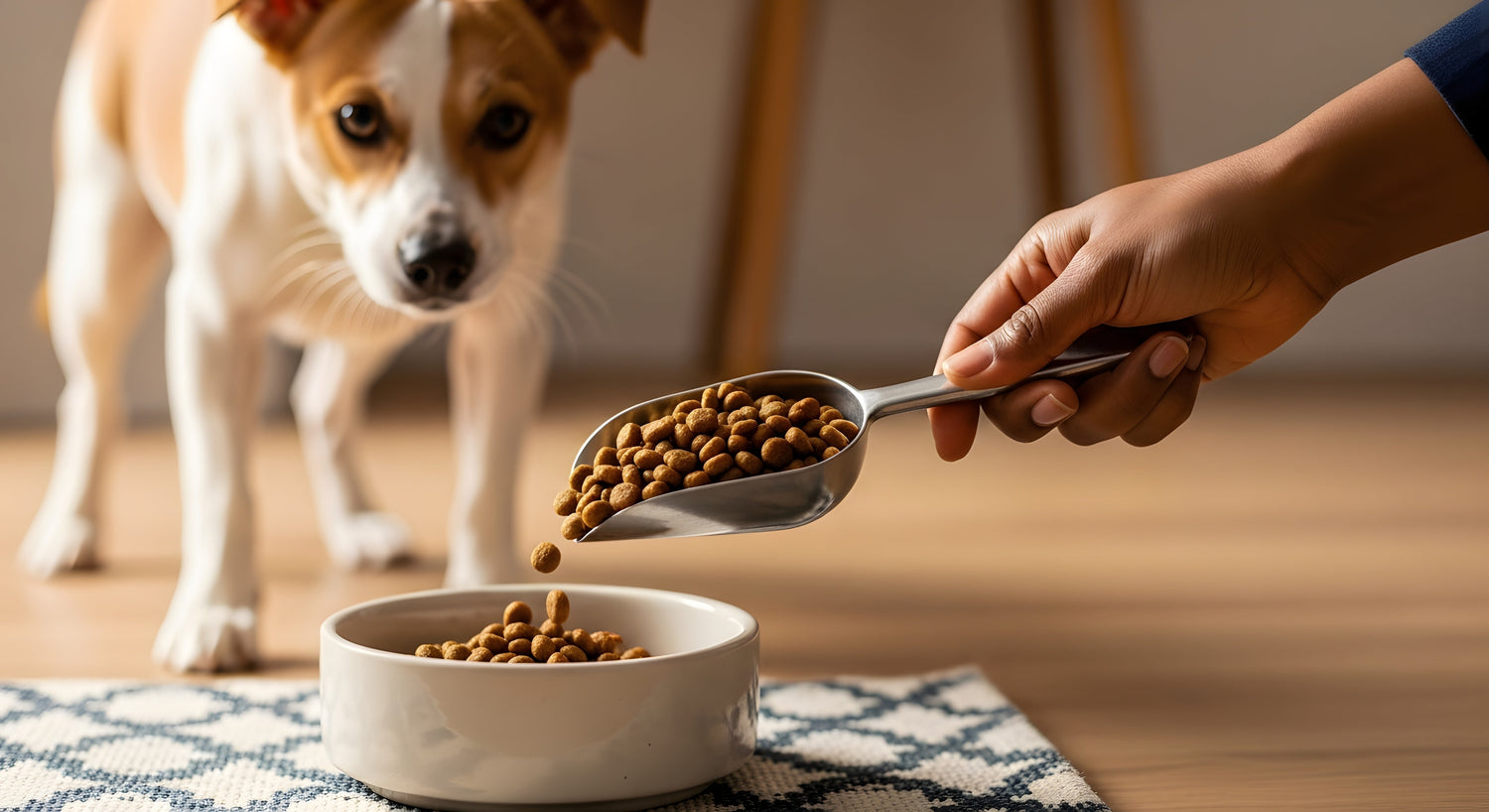
Most dog food feeding guides list the total recommended amount for the entire day, not per meal. So, if your dog eats twice a day, you'd simply divide that daily amount into two portions.
That said, it's important to remember that feeding guidelines are just that. Guidelines ! Your dog's ideal portion can vary based on age, activity level, body condition, metabolism, and any extras they're getting throughout the day.
Use Health Extension dog food as an example. On the back of each of our Healthy & Natural Dry Dog Food bags, we offer guidelines based on the weight and age of the dog. Similarly, we provide the calorie content on our Delicious & Nutritious Wet Dog Food cans, so you know exactly what you're putting into your pup's bowl.
Ultimately, every dog is different. Your veterinarian can help fine-tune portions based on your dog’s specific needs, but starting with thoughtfully formulated, science-backed nutrition made with wholesome ingredients can make that process much easier.
Why Food Quality Changes the Feeding Experience
How often you feed your dog matters, but so does the quality of what goes in the bowl. Nutrient-dense, complete-and-balanced meals help dogs get more from every bite, supporting steady energy, healthy digestion, and overall wellness.
That's one reason many pet parents focus not just on specific feeding schedules, but on ingredient quality, too. Just as we explain in our post, " Dog Food Made with Superfoods ," recipes made with wholesome proteins, functional ingredients, and nutrient-rich superfoods don't just taste good. They help your pet feel good, supporting everything from digestive comfort to immune and joint health.
Health Extension, family-owned and trusted since 1963, creates vet-formulated pet food with quality protein, functional ingredients, and more than 30 superfoods to help support whole-body wellness. Whether you're feeding dry kibble, wet food, or Gently Cooked meals, every recipe is designed to provide complete and balanced nutrition for every stage of life.
You can learn more about our mission as a brand in our post, " The Benefits of Holistic Dog Food ." Because we don't just create pet food; we aim to nourish pets family style .
Best Times of Day to Feed Your Dog
For most adult dogs, meals spaced fairly evenly throughout the day work well. Morning and evening feeding in particular is most common and practical for many households. However, the exact clock time matters less than keeping meals reasonably consistent. (Remember: dogs tend to thrive on predictable routines that support both digestion and day-to-day comfort.)
For larger or deep-chested breeds, mealtime routines may deserve a little extra attention. Because these dogs are more prone to bloat, many veterinarians recommend avoiding intense exercise immediately before or after meals and choosing smaller, more evenly spaced meals rather than one large feeding.
Consistency matters more than perfection. A mealtime that shifts by 30 minutes now and then is no big deal. Life happens! What's more important is avoiding highly erratic feeding schedules or long, unpredictable gaps that may leave your dog uncomfortable or overly hungry.
Signs Your Dog's Feeding Schedule Is Working
A feeding routine that works well usually shows up in how your dog looks, feels, and behaves day to day.
Positive signs include:
- Steady energy throughout the day
- Healthy, consistent stools
- A visible waistline with ribs that are easy to feel but not prominently noticeable
- A normal, enthusiastic appetite
- Calm, predictable behavior around mealtimes
- Healthy skin and a shiny coat
These are just surface-level signs. Ultimately, they're helpful indicators that your dog's routine and nutrition are supporting their overall wellness.
Signs It May Be Time to Adjust Your Dog's Meals
Sometimes, small shifts in appetite, behavior, or digestion can signal that your dog's feeding routine may need a closer look.
Watch for signs like:
- Vomiting yellow or foamy bile before meals (often a sign the stomach has been empty too long)
- Unusual or excessive begging between meals
- Gradual weight gain or unexplained weight loss
- Loose stools or recurring digestive upset
- Loss of interest in meals
- Low energy or unusual lethargy
- Difficulty finishing meals
In many cases, small adjustments can help resolve minor issues. Think: shifting meal timing, portion size, or food format. However, if symptoms are persistent or more severe, checking in with your veterinarian is always the best course of action.
For additional guidance, consider reading our guide, " Common Digestive Issues in Dogs ."
How to Transition to a New Feeding Schedule
Dogs tend to do best with gradual changes, especially when routines involve changes in both food and mealtime. Abrupt shifts can lead to digestive upset, appetite changes, or unnecessary stress. With this in mind, a slower transition is usually the gentler approach.
If you're changing food, we recommend following the 20% Rule : increase the new food by 20% each day while decreasing the old food by 20%. By doing this, you can create a full transition over the course of about 5 days. Dogs with more sensitive stomachs may benefit from an even slower adjustment, over 7 to 10 days.
If you're changing meal time or feeding frequency, the same gradual mindset applies. Shifting mealtimes by 15 to 30 minutes every few days can help your dog adjust more comfortably than making a sudden switch.
Here's one helpful rule of thumb: avoid changing everything at once. If you’re introducing a new food, it’s usually best to keep the feeding schedule steady until your dog has adjusted. After that, then make timing changes if needed.
We have to extremely helpful guides that can walk you through this process. Visit " How to Switch Your Pets Food Without Tummy Trouble ," as well as " Transitioning Your Pet to Health Extension Foods ."
Making Daily Feeding Easier Without Lowering Your Standards
Feeding your dog well doesn't have to be complicated. A few simple habits can make a meaningful difference: choosing complete-and-balanced nutrition, measuring portions instead of eyeballing, keeping mealtimes consistent, and remembering that treats count toward daily total, too.
For pet parents who want high-quality nutrition without the time and guesswork of preparing meals from scratch, convenient options can make staying consistent much easier. Health Extension’s vet-formulated recipes—from dry kibble and wet food to gently cooked, freeze-dried, treats, and supplements—are designed to help you build a feeding routine that works for both your dog’s needs and your everyday life.
You can set up a subscription for regular delivery, earn points through our Health-E Rewards program , or find us in-store using our store locator . Because at the end of the day, feeding your dog should feel less like a chore and more like one of the many simple ways you care for the family members who rely on you.
Feeding your dog is less about perfection and more about consistency.
So... how many times should you feed a dog? For most adult dogs, twice a day is perfectly acceptable. Puppies need more frequent meals, while seniors may require smaller portions more often. However, the best schedule is the one that's consistent, measured, and matched to your individual dog's needs and lifestyle.
Explore Health Extension's full range of foods, treats, and wellness products to find a simpler, more personalized approach to daily feeding to support your dog's nutrition through every stage of life.