Table of Contents
- What Is Gently Cooked Dog Food?
- Top Benefits of Gently Cooked Dog Food
- Gently Cooked vs. Kibble: The Real Difference
- Gently Cooked vs. Raw: Which Is Safer?
- Is Gently Cooked Dog Food Fully Cooked?
- Which Dogs Benefit Most?
- How to Transition Your Dog to Gently Cooked Food
- What to Look for in a Gently Cooked Dog Food
Summary
Gently cooked dog food uses low-temperature cooking to preserve nutrients and eliminate pathogens. It's more digestible than kibble, safer than raw, and works well for dogs with sensitive stomachs, picky appetites, or owners who want a cleaner, whole-food diet.
What Is Gently Cooked Dog Food?
Gently cooked dog food is prepared at lower temperatures than traditional commercial kibble. Instead of the high-heat extrusion process kibble undergoes, gently cooked food reaches only the temperatures needed to meet USDA pathogen-elimination standard.
That distinction matters. High heat breaks down proteins, destroys heat-sensitive vitamins, and reduces the bioavailability of key nutrients. Gently cooked food keeps those nutrients intact while still being safe for your dog to eat.
The terms "gently cooked" and "lightly cooked" are interchangeable. Both refer to the same low-temperature method and meet the same food safety requirements.
Top Benefits of Gently Cooked Dog Food
1. Higher Nutrient Retention
Kibble production subjects ingredients to extreme heat and pressure. This destroys heat-sensitive vitamins like B vitamins and vitamin C, and many brands compensate by adding synthetic vitamins back in after processing — but the food starts from a less nutritious baseline.
Gently cooked food preserves the natural nutrient content of whole ingredients because the cooking temperature stays low. Proteins remain more bioavailable, and heat-sensitive micronutrients survive the cooking process.
2. Superior Digestibility
Gently cooked food ranks "excellent" on digestibility compared to raw (high) and kibble (moderate). Lower processing means less disruption to the food's natural structure, so your dog's digestive system extracts more from every bite. Dogs on gently cooked diets often produce smaller, firmer stools — a reliable sign of better nutrient absorption.
3. Safer Than Raw
Raw diets carry real pathogen risks. Salmonella, E. coli, and Listeria can contaminate raw meat and put both your dog and your household at risk. Gently cooked food eliminates those pathogens through controlled cooking while retaining much of the nutritional profile raw diets are known for. It gets most of the benefits of raw without the handling risks.
4. Higher Palatability
Dogs love it. The gentle cooking process brings out the natural aromas and flavors of whole proteins and vegetables in a way dry kibble simply can't replicate. Even picky eaters typically respond well to gently cooked food — making it an effective solution for dogs who skip meals or pick at their bowl.
5. Cleaner Ingredients, Fewer Fillers
Most gently cooked dog foods use whole, recognizable ingredients — real chicken, real beef, real vegetables — rather than the by-product meals and grain fillers that bulk up many kibble formulas. The ingredient list is shorter and cleaner because the food doesn't need synthetic preservatives, binders, or artificial additives to hold its form.
6. Better Hydration
Gently cooked food retains its natural moisture. Many dogs on dry kibble diets run mildly dehydrated because their food provides minimal water content. The higher moisture in gently cooked food contributes to daily hydration, which supports kidney function, digestion, and coat health.
Gently Cooked vs. Kibble: The Real Difference
Kibble's core problem is its production process. Extrusion — the method used to make most dry dog food — involves cooking ingredients at temperatures above 300°F under high pressure. This destroys heat-sensitive nutrients, denatures proteins, and concentrates carbohydrates. Most commercial kibble contains 30–60% carbohydrates, far above what dogs require biologically.
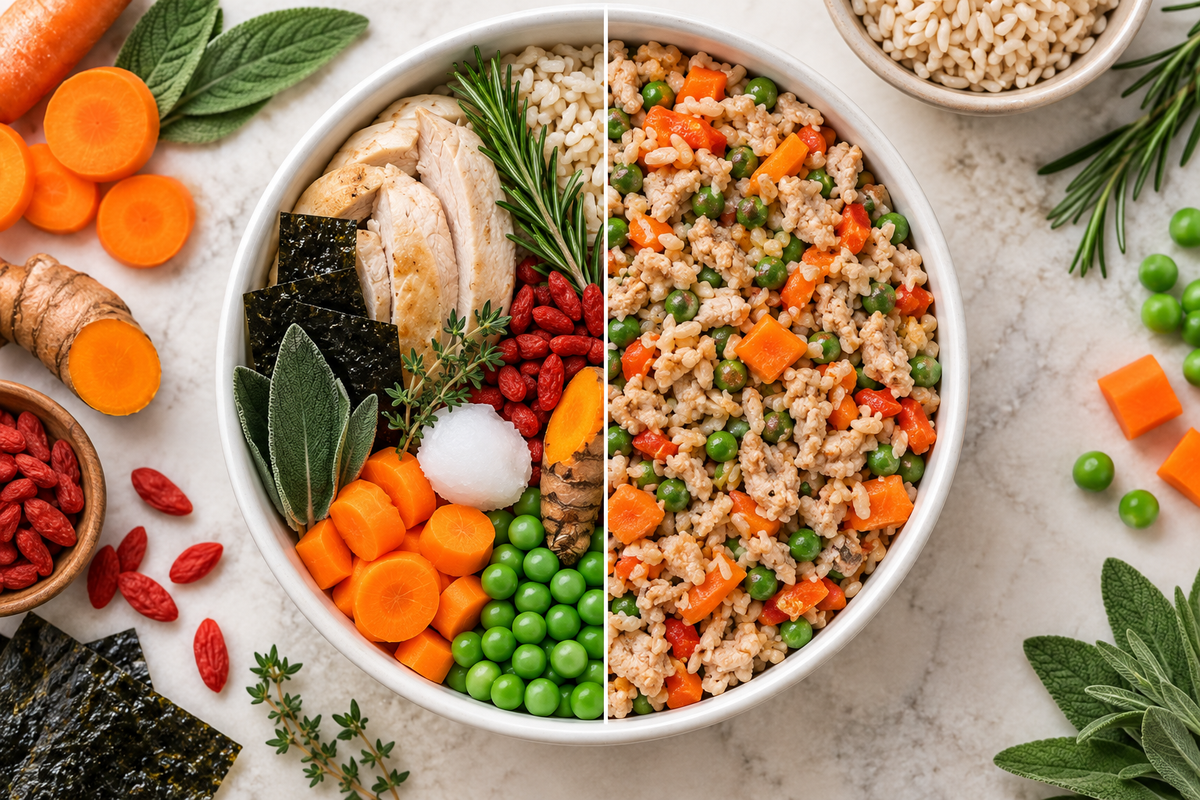
Gently cooked food mirrors the macronutrient ratios of a balanced whole-food diet: high protein, moderate fat, and controlled carbohydrates from digestible sources like pumpkin, potato, and carrots.
The palatability gap is significant too. Kibble's bland, uniform texture rarely excites dogs. Gently cooked food — with its aroma, moisture, and varied texture — is consistently more appealing at mealtime.
Gently Cooked vs. Raw: Which Is Safer?
Raw and gently cooked diets share a philosophy: real whole ingredients, minimal processing, and no artificial additives. The key difference is food safety.
Raw food carries genuine pathogen risks. Both the CDC and FDA warn about health risks from raw pet food for animals and their human households. Gently cooked food eliminates those risks through low-temperature cooking while preserving most of the nutritional benefits raw diets offer.
In terms of pure nutrient retention, raw food does score slightly higher on certain vitamins. But gently cooked food retains far more nutrients than kibble, and for most pet parents it offers the best balance of safety, nutrition, and convenience.
Is Gently Cooked Dog Food Fully Cooked?
Yes. Despite the name, gently cooked dog food is fully cooked. The word "gently" refers to the cooking temperature — low and controlled rather than high and aggressive. The food reaches USDA-compliant temperatures to eliminate pathogens, so it's safe to handle and serve without the precautions raw food requires.
Which Dogs Benefit Most?
Gently cooked food works well across most life stages and breeds, but certain dogs see particularly strong improvements:
- Sensitive stomachs: High digestibility and whole-food ingredients reduce GI upset in dogs prone to digestive issues.
- Picky eaters: The aroma and texture of gently cooked food converts many chronic picky eaters.
- Dogs with dull coats or low energy: Improved nutrient bioavailability often shows up first in coat quality and energy levels within a few weeks of switching.
- Senior dogs: Aging dogs often have reduced digestive function, and gently cooked food is easier for them to process.
- Allergy-prone dogs: Shorter, cleaner ingredient lists make it easier to identify and avoid trigger proteins.
PetMD notes that fresh, minimally processed food may particularly benefit dogs with sensitive stomachs, picky appetites, or food allergies.
How to Transition Your Dog to Gently Cooked Food
A gradual transition reduces the chance of digestive upset. A typical 7–10 day schedule:
| Days | Current Food | Gently Cooked |
|---|---|---|
| 1–3 | 75% | 25% |
| 4–6 | 50% | 50% |
| 7–9 | 25% | 75% |
| 10+ | 0% | 100% |
If your dog has a particularly sensitive stomach, extend each phase by a day or two. Most dogs transition without issue.
What to Look for in a Gently Cooked Dog Food
Not all gently cooked products are created equal. Here's what to check before buying:
1. Named whole proteins first. The first ingredient should be a named protein like chicken, beef, or lamb — not "meat meal" or "animal by-product."
2. AAFCO-complete. The label should state the food is "complete and balanced" per AAFCO nutritional profiles, confirming it meets minimum nutrient requirements for your dog's life stage.
3. Short, recognizable ingredient list. If the ingredient list reads like a chemistry exam, that's a red flag. Quality gently cooked food uses ingredients you recognize from your own kitchen.
4. Cooked in bone broth. Some gently cooked formulas use bone broth as the cooking liquid, which adds natural collagen, glucosamine, and flavor.
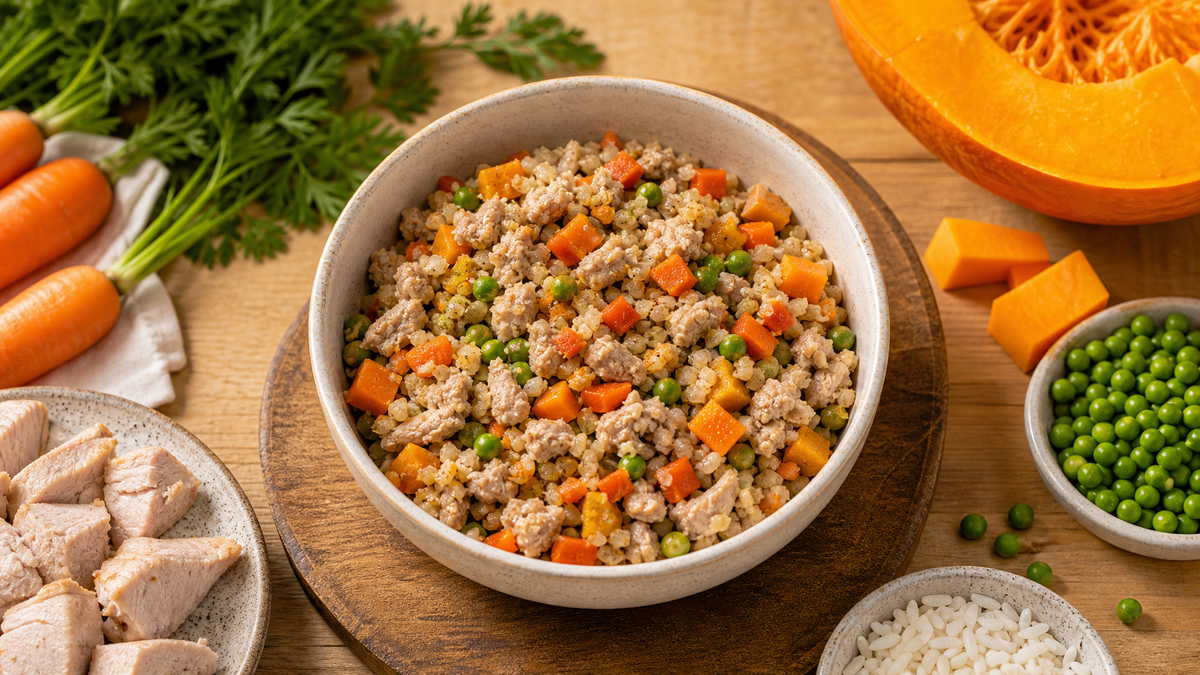
Health Extension's Gently Cooked line checks every one of these boxes. All three recipes — Chicken and Pumpkin, Beef and Potato, and Lamb and Carrot — are slow-cooked in bone broth with real whole-food ingredients and formulated for complete and balanced nutrition. Prices start at $3.99 for a single-serve pouch, making it easy to try without a big commitment.
New to gently cooked? The Sample and Variety Pack is the lowest-friction way to find your dog's favorite recipe before buying in bulk.
Is the Switch Worth It?
For most dogs and most households, yes. Gently cooked dog food offers a meaningful nutritional upgrade over kibble with far less handling risk than raw. The results — better coat, more energy, firmer stools, and renewed enthusiasm at mealtime — typically show up within weeks of switching.
The shift mirrors how we increasingly think about our own food: away from ultra-processed convenience and toward whole, minimally processed ingredients. Your dog's health reflects their diet just as much as yours does.
Ready to see the difference? Explore Health Extension's Gently Cooked recipes and find the right fit for your dog.