Description
Yes, you can mix human-grade gently-cooked fresh dog food with kibble when both foods are complete and balanced. This guide covers portions, transition steps, and how Health Extension Little Bites plus shelf-stable fresh pouches work together.
Gently Cooked vs. Kibble: Can You Feed Both? A Guide to Mixing Fresh and Dry Dog Food
TLDR
You can feed human-grade gently-cooked fresh dog food and kibble in the same bowl. Both formats offer different strengths: kibble is convenient and easy to portion, while fresh food brings moisture, aroma, and whole ingredients cooked in bone broth. The safe way to mix is calorie math, not guesswork. Count your dog's daily calories, split them between the two foods, and introduce the new texture over several days. Health Extension makes this simple because Little Bites and human-grade gently-cooked fresh dog food are both complete and balanced, and the pouches stay shelf-stable until you open them.
Table of Contents
- Can you mix fresh dog food with kibble?
- What each format does well
- Why mixing is common
- How to portion a mixed bowl
- A simple 7-day mix-in plan
- What to watch after you mix
- How Health Extension formats work together
- FAQ
Can you mix fresh dog food with kibble?
Yes. Mixing dry food with a complete fresh meal is a standard feeding pattern, not a nutritional workaround. PetMD notes that wet and dry foods can both be nutritionally balanced, and that mixing them can give you the strengths of both formats if you still hit the right daily calorie total. Veterinary-reviewed guidance from Ollie reaches the same conclusion: mixing is generally safe when the fresh food is a balanced recipe, not leftover table scraps.
The confusion usually comes from raw feeding debates, not from cooked fresh food. Raw and kibble raise separate food-safety and digestion questions. Human-grade gently-cooked fresh dog food is cooked, complete, and served with the cooking liquid still in the pouch, so you are pairing two ready-to-eat complete foods.
Look for an AAFCO nutritional adequacy statement on both labels. AAFCO explains how that statement tells you whether a food is complete and balanced for a life stage. FDA notes that AAFCO sets separate nutrient profiles for growth and for adult maintenance, so match both foods to your dog's life stage. Health Extension Chicken & Pumpkin, Beef & Potato, Lamb & Carrot, Duck & Kale, and Salmon recipes are formulated to AAFCO Dog Food Nutrient Profiles for All Life Stages. The Vegetarian recipe is formulated for adult maintenance. Little Bites recipes cover small-breed puppies through adults, depending on the bag.
What each format does well
Kibble and fresh food are different formats with distinct benefits. One is not a replacement lecture for the other.
Kibble strengths
- Easy to measure and leave out for grazers
- Often more affordable per calorie
- Works in puzzle feeders and travel bowls
- Small-breed pieces, such as Little Bites Chicken & Brown Rice, fit compact jaws
- Many recipes include probiotics and a long list of superfoods
Human-grade gently-cooked fresh dog food strengths
- High moisture (about 78% in Health Extension pouches), which helps dogs who drink little
- Stronger aroma and a soft texture picky dogs often finish
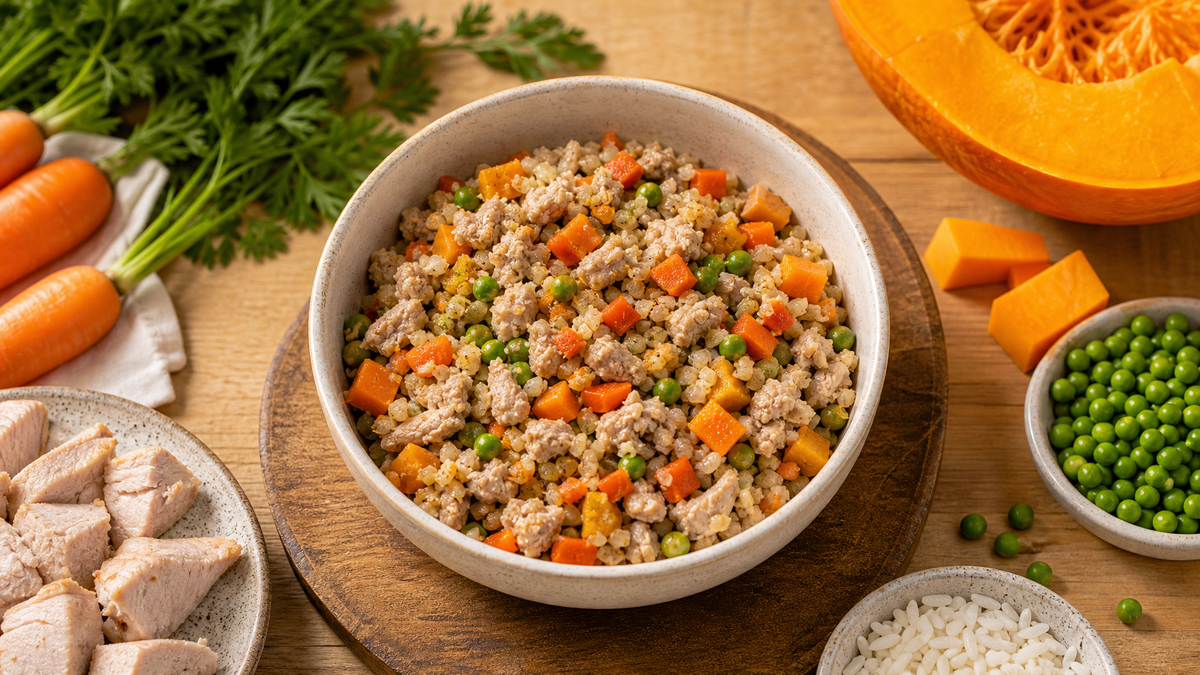
- Visible whole ingredients: chicken, pumpkin, carrots, brown rice, bone broth
- Cooking liquid stays in the meal, so water-soluble nutrients stay in the bowl
- No fridge or freezer until you open the pouch
PetMD points to wet food for hydration, palatability, satiety, and easier chewing, and to dry food for convenience, enrichment, and cost. A mixed bowl can borrow from both lists.
Gentle cooking also treats nutrients differently than long boiling or high-heat dry processing. Internal Health Extension cooking-method notes show pressure-style gentle cooking typically loses far fewer water-soluble vitamins than long boiling, and it avoids the high oven temperatures used in some dry-heat processing. Because the bone broth stays in the pouch, minerals and B vitamins that move into the liquid still get eaten.
Why mixing is common
Families mix for practical reasons:
- Budget. Fresh food costs more per calorie. A 25% or 50% mix still upgrades the bowl without a full switch.
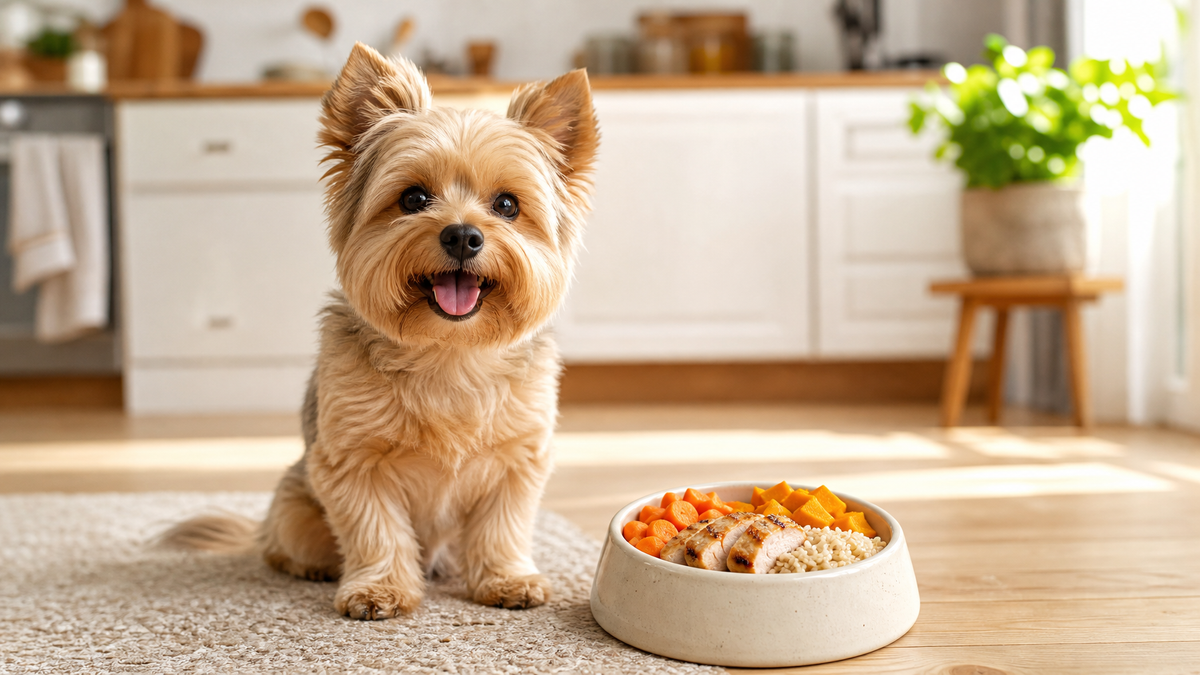
- Picky eaters. A spoon of Chicken & Pumpkin over Little Bites often gets a small dog to finish kibble they previously ignored.
- Hydration. Small dogs can be light drinkers. Adding a moist pouch raises water in the meal.
- Routine. Kibble stays in the pantry. Pouches travel without a cooler.
- Transition. Mixing is the safest on-ramp if you later want more fresh food in the rotation.
Mixing does not "undo" a complete food when both recipes already meet AAFCO profiles. The risk is extra calories, not a mysterious nutrient clash. Treats still count toward the daily total.
How to portion a mixed bowl
- Ask your veterinarian for a daily calorie target, or start from the feeding guide on your current kibble and adjust for body condition.
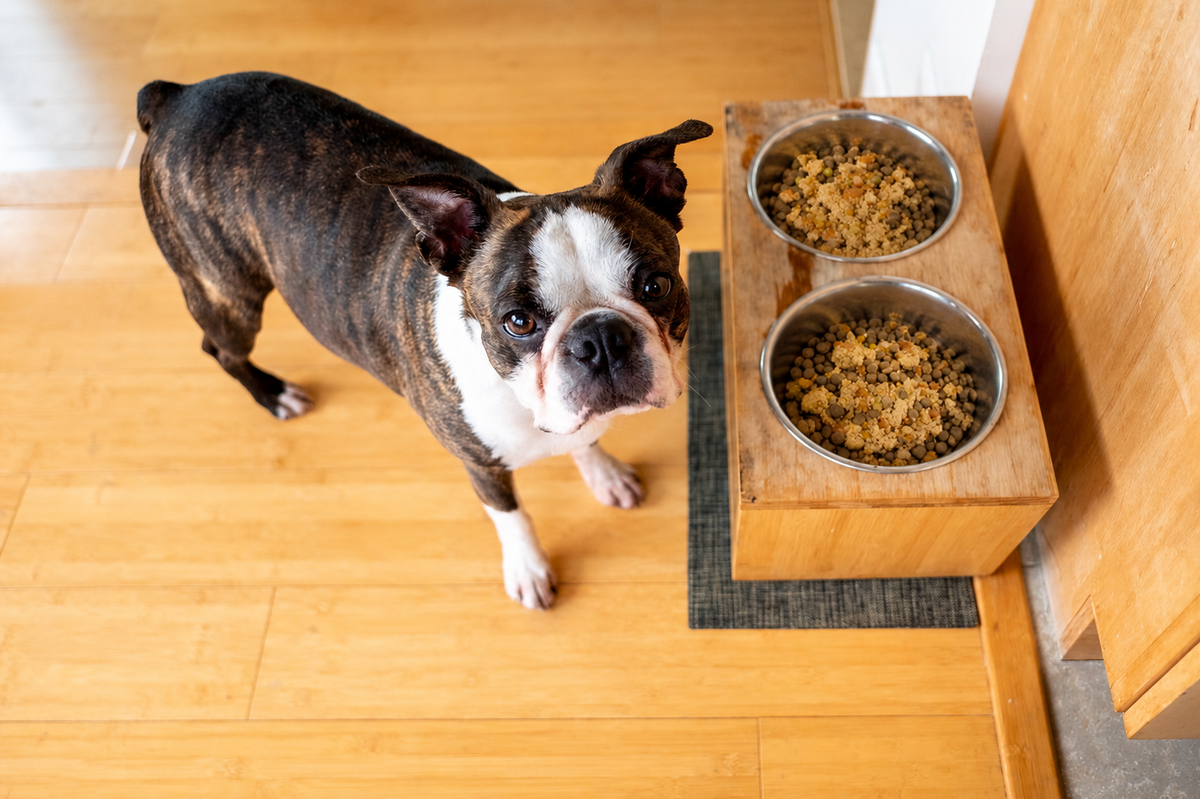
- Decide a split. Common starting points: 75% kibble / 25% fresh, or 50/50.
- Convert calories to volume. A 9 oz Health Extension pouch is a full meal-size portion for many small dogs; a 3 oz pouch is a topper or a small-dog meal. Little Bites feeding guides list cups by weight.
- Subtract, do not stack. If you add 3 oz of fresh food, remove enough kibble to match those calories.
- Keep treats steady while you test the mix.
Example for a 12 lb adult dog whose vet set 350 calories a day, on a 50/50 plan: about 175 calories from Little Bites and about 175 calories from a fresh pouch. Exact cups and ounces depend on the recipe, so use the calorie information on each package rather than eyeballing "half a bowl."
Blue Buffalo and Chewy both emphasize that mixing is fine when you still feed the right amount. PetMD is more specific: have daily calories calculated, then split those calories between wet and dry.
A simple 7-day mix-in plan
Sudden swaps are what upset stomachs, not a steady mix. Dog Food Advisor notes that digestive trouble usually follows an abrupt change, not a consistent combination.
| Days | Fresh share of the meal | What to do |
|---|---|---|
| 1-2 | 1-2 teaspoons (toy) or 1 tablespoon (small breed) | Mix into the usual kibble. Watch stool. |
| 3-4 | About 25% of meal calories | Hold here if stool softens. |
| 5-7 | Your target split (often 25-50%) | Stay at this ratio for two weeks before you raise fresh again. |
If stool stays loose more than a day or two, drop back one step. Offer fresh water. Pause new treats. Call your veterinarian if vomiting, lethargy, or refusal to eat lasts more than a meal or two.
For toy and teacup dogs, start with the 3 oz pouches. Chicken & Pumpkin is a frequent first recipe because lean chicken and fiber-rich pumpkin sit well with many sensitive tummies. Rotate Beef & Potato or Lamb & Carrot later if your dog enjoys variety. Grain-free Duck & Kale or Salmon is a better first pouch if you already feed grain-free Little Bites.
What to watch after you mix
Stool. Firm, easy-to-pick-up stools are the green light. Soft stools mean you moved too fast or the calorie load is high.
Body condition. You should feel ribs under a light fat cover. Extra moisture food is filling, but it still has calories. Weigh every two weeks during the first month.
Coat and itch. Coconut oil, salmon oil, and whole meats in both lines support skin. If itching worsens after introducing a new recipe, consider trying a different recipe rather than abandoning mixing altogether
Dental care. Kibble can encourage chewing; it is not a substitute for brushing or dental chews. Keep those habits.
Storage. Opened pouches go in the fridge and should be used within a couple of days. Unopened pouches stay in the pantry (18-month shelf life). Do not leave mixed wet-and-dry food out for hours in warm weather.
How Health Extension formats work together
Health Extension is a family-owned company that has made holistic pet food since 1963. The lineup is built so formats can share a bowl.
- Human-grade gently-cooked fresh dog food. Real meat first, vegetables, and superfoods (bone broth, turmeric, kelp, sage, thyme, coconut oil, goji berry). Shelf-stable 3 oz and 9 oz pouches. Variety Pack if you want to test flavors. MSRP starts at $1.99 for 3 oz and $4.99 for 9 oz.
- Little Bites. Small kibble for teacup, toy, and miniature breeds. Real chicken first in the grain-in recipes, 30+ superfoods, probiotics, coconut oil. Grain-free proteins include chicken & turkey, salmon, venison, and buffalo & whitefish. Little Bites Lite is 50% less fat for less active or overweight small dogs.
- Air-Dried Superfoods. 85% animal-sourced protein, 30+ superfoods, no fridge. Use as a complete meal, a crunchy topper on kibble, or a high-value treat. Do not add a large air-dried scoop on top of a full mixed bowl without cutting calories elsewhere.
- Broth-Licious. Single-serve cups in bone broth (Healthy Belly, Mobility, Shiny Coat, Vitality). A splash over Little Bites is a lighter moisture boost than a full fresh pouch.
A practical small-dog routine: Little Bites as the daily base, one 3 oz gently cooked pouch mixed into dinner, Broth-Licious or a few Air-Dried pieces on training days. That keeps taste high without turning every meal into a calorie pile-up.
FAQ
Is mixing kibble and fresh dog food safe? Yes for most healthy dogs, when both foods are complete and balanced and you control portions. Ollie and PetMD both treat mixing as a normal option.
Should I feed half kibble, half fresh? You can, if the calories still match your dog's needs. Many owners start closer to 75/25.
Does mixing cause stomach problems? A sudden jump can. A gradual mix usually does not. Sensitive dogs may need a slower ramp.
Can I mix Health Extension fresh food with another brand of kibble? Yes if that kibble is also complete and balanced. Matching life stage and watching ingredients (for example, staying grain-free on both sides if that is your plan) keeps the bowl consistent.
Do I need to refrigerate the pouches? Not until you open them. That is the point of shelf-stable human-grade gently-cooked fresh dog food: fresh-style meals without a crowded freezer.
When should I talk to a veterinarian first? Before any diet change if your dog has a diagnosed medical condition, is underweight, is a growing puppy with special needs, or is on a veterinarian-directed diet. This article is general nutrition education, not medical advice.
A mixed bowl that still feels like Health Extension
You do not have to pick a single format. Kibble handles daily convenience. Human-grade gently-cooked fresh dog food brings moisture, bone broth, and the taste of a home-style meal. Portion the calories, move slowly, and stay inside complete-and-balanced recipes.
Shop human-grade gently-cooked fresh dog food and Little Bites to build a mixed bowl your small dog will actually finish.